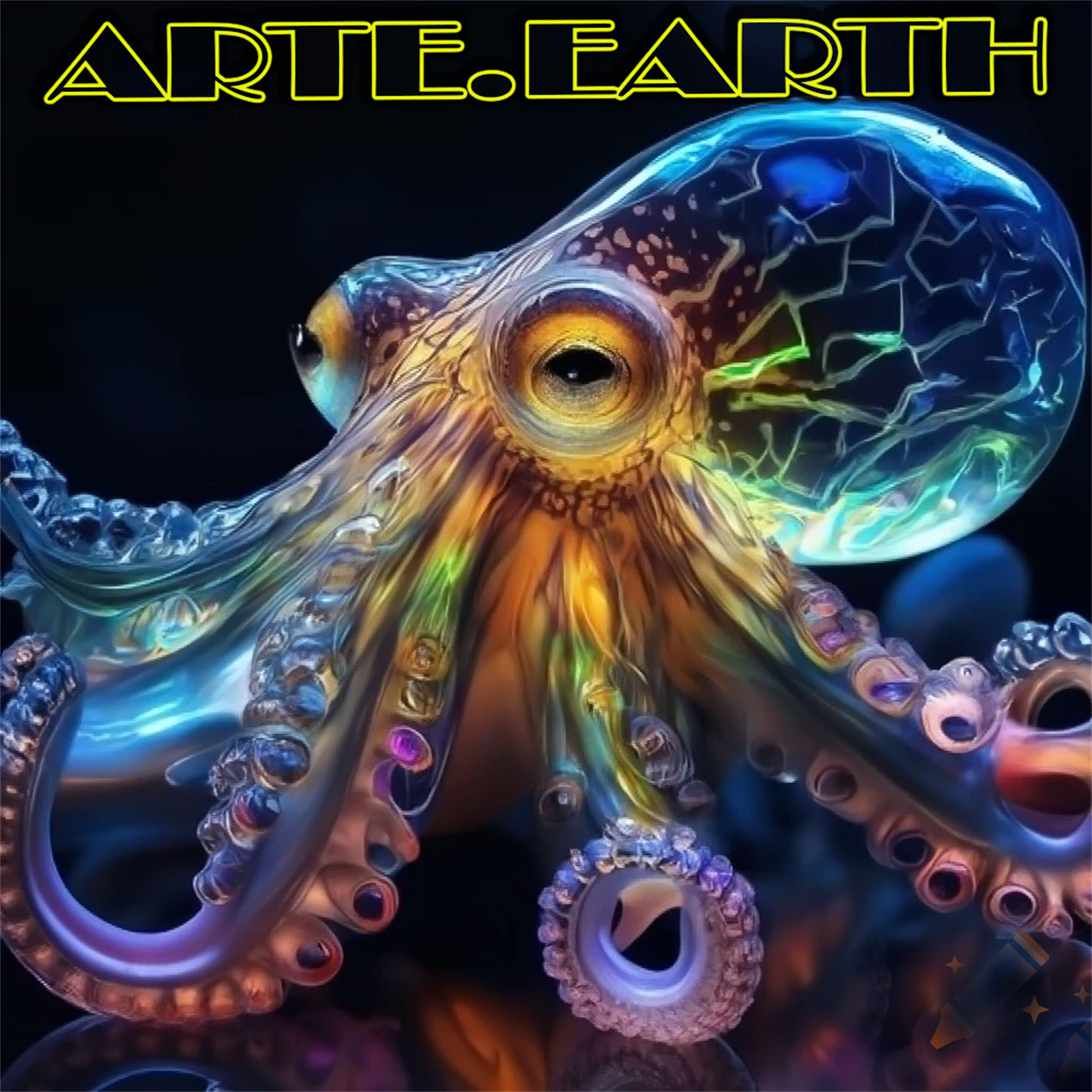
Cracked Brain Octopus
Endagered Species
Arte.Earth Art Exhibition
The Smartest Octopus on Earth
ARTE EARTH
Arte Earth Art Exhibit: "Endangered Species On Planet Earth" in Pictures Exhibition.
Multidimensional Art Exhibition Created By Artist DAPACU, Arte.Art And Austin.Art.
Click Art Pictures To Advance On The Art Exhibition Presented By Arte Earth & Arte.Art
ENDANGERED SPECIES ON PLANET EARTH BY DAPACU
"ENDANGERED SPECIES ON PLANET EARTH"
Art Exhibition By DAPACU Multidimensional Artist
Sponsors: Austin.Art * MuseuminAustin.Com * Arte.Art
In the hushed halls of the esteemed DAPACU Art Museum, a new exhibition has unfurled, one that speaks not only to the aesthetic sensibilities of its patrons but also to the very heart of our shared planetary existence. "Cracked Brain Octopus: Endangered Species on Planet Earth" is more than just a collection of captivating art pictures; it is a poignant call to action, a vibrant yet melancholic testament to the fragile beauty of life teetering on the brink of oblivion. The centerpiece, of course, is the spectral depiction of the "Cracked Brain Octopus," a creature whose very name sparks curiosity and, upon deeper reflection, a profound sense of urgency.
This unique cephalopod, indigenous to the rugged Atlantic Ocean coastlines, is aptly named. Its common moniker, whispered in hushed tones by marine biologists and oceanographers, is a poetic encapsulation of its perceived struggle. The "cracks" in its seemingly empty brain are not a sign of deficiency, but rather a visual metaphor for the immense, perhaps overwhelming, pressure this species faces in a rapidly changing world. The artist, through a series of evocative art pictures, has managed to imbue these "cracks" with a sense of intellectual depth, of a mind working furiously, trying to process a reality that is increasingly hostile.
The art exhibit at DAPACU is a masterclass in visual storytelling. Each piece, meticulously rendered, invites the viewer to peer into the world of the "Cracked Brain Octopus." We see it camouflaged against coral reefs, its bioluminescent skin pulsing with a spectrum of colors that defy earthly palettes. Yet, in these vibrant displays, there's an underlying fragility. The art pictures capture the creature's graceful movements, the ethereal dance of its tentacles, but also the ever-present threat in its surroundings. Pollution seeps into the frame, the encroaching shadows of human activity loom large, and the vibrant hues of the natural nature begin to subtly fade, mirroring the octopus's own precarious situation.
One particularly striking piece depicts the octopus in what appears to be a moment of contemplation. Its large, intelligent eyes, far from empty, are filled with a profound, almost ancestral wisdom. The artist has rendered these eyes not as vacant voids, but as deep pools reflecting the vastness of the ocean and the accumulated knowledge of its species. The "cracks" are subtly visible, not as fissures of weakness, but as intricate patterns, like ancient script, hinting at the complex, albeit struggling, cognitive processes within. It's as if the octopus, faced with an unprecedented challenge, is grappling with solutions, its very existence a testament to evolutionary adaptation now pushed to its limits.
The exhibition curator, speaking at the opening, emphasized this very point. "The 'Cracked Brain Octopus' is a symbol," they stated, their voice resonating with passion. "It represents not just this one magnificent species, but all endangered species on Planet Earth. It represents the silent struggle of natural nature against overwhelming odds. The art pictures here are not just beautiful; they are dispatches from a world that is vanishing before our eyes."
The term "cracked brain," when applied to this creature, is a misnomer born of observation rather than understanding. The exhibit aims to dismantle this simplistic notion. Through scientific illustrations interwoven with artistic interpretations, viewers learn about the octopus's sophisticated problem-solving abilities, its remarkable learning capacity, and its vital role within its ecosystem. The "cracks," in this context, become akin to the stress lines on a revered artifact, signs of immense pressure that, paradoxically, highlight its enduring strength and resilience.
The motivational tone of the exhibition is palpable, even in its somber subject matter. The sheer beauty and artistic merit of the "Cracked Brain Octopus" art pictures serve to ignite a spark of appreciation, a desire to protect what is so clearly precious. "We are not here to dwell in despair," the curator continued, their gaze sweeping across the assembled audience. "We are here to be inspired. Inspired by the tenacity of life, by the breathtaking artistry of evolution. The 'Cracked Brain Octopus' is a living, breathing masterpiece, and its potential disappearance would be an irreparable loss to the tapestry of terrestrial life. Our hope is that this art exhibit, this encounter with its image, will move you to become its champion."
The DAPACU Art Museum, through this powerful exhibition, has transformed a quiet corner of the Atlantic Ocean into a focal point for global consciousness. The "Cracked Brain Octopus," once a creature known only to a few, now stands as a vibrant sentinel, urging us to confront our impact on the natural world. The art pictures are a testament to its beauty, its intelligence, and its desperate need for our intervention. As we wander through the gallery, we are not just admiring art; we are bearing witness. We are being challenged to extend our own cognitive abilities, to "think" beyond our immediate needs and consider the profound consequences of our actions on all life on Planet Earth. The "cracks" in the octopus's brain are a reflection of the cracks in our own collective conscience, and it is time we began to mend them.
Endangered Species: "Cracked Brain Octopus" By DAPACU